
Condition-based beginner suitability
Is Dreamland Beach Good for Beginner Surfers?
Dreamland can look inviting from the sand, but its waves change quickly. A beginner lesson needs a selected inside zone, manageable swell, suitable tide, controlled current and enough space—not simply a sunny day at a famous beach.
Local insight from Hendra Surf School · Approximately 9 minutes
The short answer: sometimes
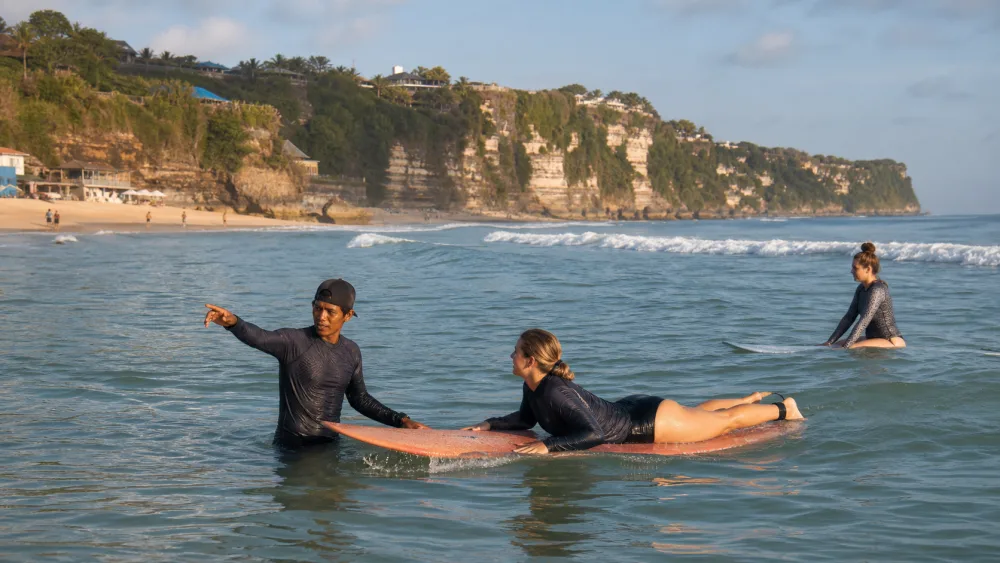
Dreamland is not automatically easy because it has a sandy shoreline. The beach receives open-ocean energy and contains several shifting peaks. On a small day, a softer inside wave may support first-time practice. With more swell, wind or moving water, those same peaks can become steep, fast or crowded.
A responsible beginner surf lesson at Dreamland begins with observation. The coach decides whether the inside provides enough control and can recommend another time or location when it does not.
| Possible lesson zone | Selected inside whitewater or soft reform. |
|---|---|
| Helpful conditions | Modest swell, suitable water depth, light wind and controlled current. |
| Reasons to change plan | Close-outs, strong rip, heavy shorebreak, rocks, large sets or crowd. |
| Main peak use | Only after the surfer has reliable board control and green-wave ability. |
| Best promise | A condition-led lesson—not guaranteed Dreamland surfing on every date. |
Why Dreamland can work for learners
A broad beach can provide more than one coaching option. If one peak is too fast, another part of the inside may receive broken waves with more time between sets. Sand closer to shore can feel less intimidating than a shallow coral take-off, although submerged rocks and shelves still require attention.
Dreamland also allows a developing beginner to observe clear differences between whitewater, an unbroken peak and a channel. With direct guidance, those visual cues can build ocean awareness instead of treating every incoming line as the same wave.
The five beginner checks
1. Set size, not only average size
A beach may look small between sets. The largest group of waves determines whether the practice zone remains controlled. The coach waits long enough to see the real range.
2. Wave shape
A slow reform supports repetition. A fast close-out gives little time to stand and can push the board directly toward shore. Shape matters as much as height.
3. Current
Rips and sideways movement can carry a learner away from the coach or into another peak. A suitable zone allows the student to return to position without spending the entire session fighting water.
4. Shorebreak and rocks
Higher water or a stronger swell may create waves that dump near the sand. Lower water can make rocks or shelves more relevant. Entry and exit should be chosen before the student carries the board into the water.
5. Crowd
Large beginner boards need recovery space. When swimmers, surfers and lessons share a narrow inside zone, moving elsewhere can be safer and more productive.
What each beginner level can practise
First session
The focus is board handling, prone position, a stable pop-up, safe falling and short supported rides. The student stays close enough to hear instructions and reset calmly.
After standing in whitewater
The next objective may be earlier paddling, independent starts and keeping a controlled line. The coach can introduce wave selection before moving toward an unbroken peak.
Starting green waves
A developing beginner may practise angled take-offs on a softer Dreamland peak. This move should follow consistent board control, awareness and the ability to stop or turn away from another surfer.
Common assumptions to avoid
“It is a beach break, so there is no reef or rock”
Dreamland has sand, but submerged rock and harder shelves can influence different sections. The bottom should not be assumed from the dry beach alone.
“High tide is always safer”
More water can soften some peaks, but it may also produce an abrupt shorebreak. Tide must be matched with swell and the intended zone.
“Other lessons in the water prove it is suitable”
Another group may have a different ability, instructor ratio or objective. Your session needs its own assessment.
Preparing for the lesson
- Tell Hendra whether you have surfed before and can swim confidently.
- Share the number of surfers, date and accommodation area.
- Bring practical swimwear, drinking water and personal sun protection.
- Keep the requested time flexible until conditions are confirmed.
- Follow the selected entry, exit and wave-zone instructions.
If Dreamland is too demanding, moving the lesson is a positive coaching decision. More repetition at an appropriate wave usually creates faster progress than forcing a famous location.
Dreamland Surf FAQs
Can a complete beginner learn at Dreamland?
Yes on selected small, manageable days, but another location may be recommended when the inside is unsuitable.
Is Dreamland a sandy-bottom beach?
The shoreline is sandy, while submerged rock or shelf features may influence different wave zones.
What tide is best for beginners?
There is no universal answer. The coach matches tide with swell, shorebreak, current and the chosen section.
What happens if the waves are too big?
The time, section, objective or location may change.
Can beginners catch green waves at Dreamland?
Developing beginners may do so on a softer peak after showing reliable board control.
How early should I book?
Message in advance, then reconfirm the useful time as the forecast becomes clearer.
Ask Hendra Whether Dreamland Fits Your Level Today
Share your experience, group size and date. Hendra will check the tide, swell, wind, current and suitable wave zone before confirming.