
Timing Dreamland by level and conditions
Best Time to Surf Dreamland: Tide, Season, Swell and Wind
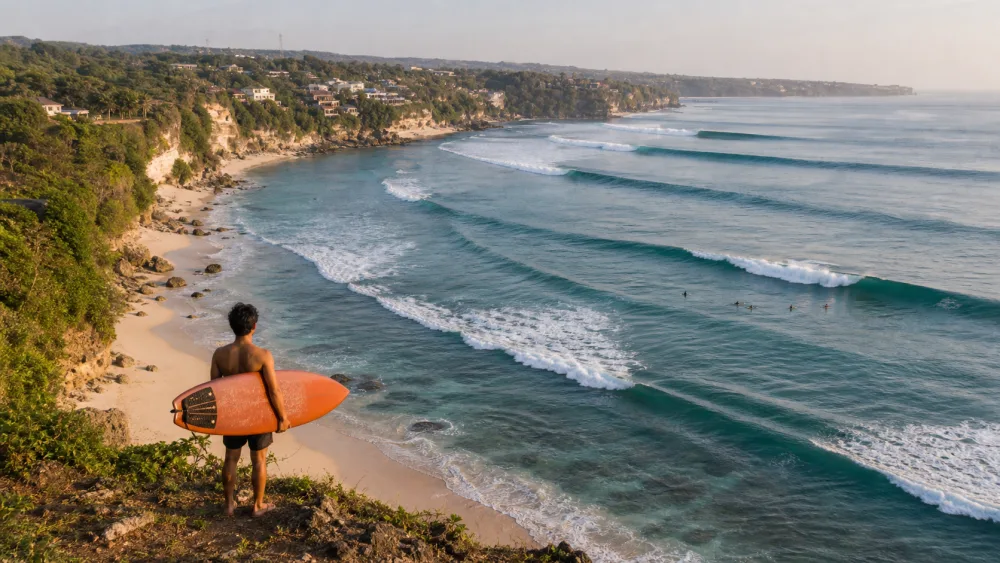
Dreamland has no single best hour for every surfer. Its open beach, shifting peaks and mixed bottom respond to swell, tide, wind and sand movement. The right window is the one that matches both the chosen section and your actual ability.
Local insight from Hendra Surf School · Approximately 10 minutes
Start with the surfer, not the clock
A clean outside A-frame can be the best wave for a capable intermediate and the wrong environment for a first-timer. A softer inside reform can produce useful beginner repetition even when the main peak is unremarkable. Timing must follow the objective.
Before arranging surf coaching at Dreamland, share your level and date. Hendra can compare the forecast with the wave zone likely to support the session.
| Dry season | More consistent south/southwest swell and common offshore trade winds. |
|---|---|
| Wet season | More variable west-coast wind, with occasional calm or smaller windows. |
| Beginner priority | Manageable inside waves, controlled current, space and safe entry/exit. |
| Intermediate priority | Readable green peaks, useful face and enough challenge without uncontrolled consequence. |
| Confirmation | Use forecast for planning, then observe the beach close to the session. |
Dry-season pattern
From roughly April through October, southern Indian Ocean swell is more consistent and southeasterly trade wind is commonly offshore along this coast. Dreamland can show cleaner, more defined peaks during this period.
Consistency also brings stronger days and more visitors. A good dry-season forecast for an experienced surfer can increase current, shorebreak and close-outs for a learner. Season is context, not permission.
Wet-season opportunities
The wetter months often bring less favourable west-coast wind and less consistent swell. Yet calm mornings, short offshore windows or smaller energy can still create a useful inside session. Fewer famous-wave conditions may also reduce lineup pressure.
Do not assume wet season equals beginner season. Wind-driven texture, heavy rain runoff or an awkward shorebreak can still make the beach a poor lesson choice.
How swell, tide and wind interact
Swell
Dreamland receives south and southwest energy. More size and period can activate outside peaks, increase set range and strengthen channels. Smaller swell may soften the beach, but weak peaks can also close out or fade quickly.
Tide
Lower water can sharpen certain peaks and reveal rocks or harder bottom features. Mid water may balance shape and depth for one section. Higher water can soften another section or move the break close to shore. No single tide description applies to the entire beach.
Wind
Light offshore wind produces cleaner faces and easier reading. Morning is often considered because local wind may be lighter, but a favourable tide later can outweigh the desire to surf early.
A forecast number describes incoming energy. It does not show the exact Dreamland peak, current or crowd that will exist when you arrive.
Timing by skill level
First-timers
Prioritise a slow inside reform, enough water for controlled falls, low current and room to recover the board. The best time may be outside the most photogenic surf window.
Developing beginners
Look for a peak that allows angled take-offs without a fast closing section. Tide should support both the ride and an uncomplicated exit.
Intermediates
A moderate A-frame can support positioning, left/right decisions and turns. The wave should remain readable enough that coaching feedback can be applied repeatedly.
Advanced surfers
Larger swell can activate more powerful outside sections, but rocks, shorebreak, rips and crowded take-offs still need assessment.
Crowd and beach use
Dreamland is both a surf beach and a visitor destination. Early sessions can reduce beach traffic, while prime swell concentrates surfers on the better peaks. Later in the day, swimmers and shorebreak may narrow the safe entry zone.
A slightly imperfect but spacious wave can be more valuable for coaching than a perfect crowded peak. The session should maximise safe attempts, not only wave quality.
Plan with a flexible window
- Book ahead with your date and honest ability.
- Use forecast ranges rather than one fixed height.
- Reconfirm when tide and wind timing are clearer.
- Watch the largest sets and current on arrival.
- Change section or location when Dreamland does not support the objective.
The most useful question is: “Which Dreamland section and time match my level today?”
Dreamland Surf FAQs
What is the best season to surf Dreamland?
Dry season often provides more consistent swell and offshore wind, but suitability still depends on the surfer and daily conditions.
Is morning always best?
No. Morning often has lighter wind, but tide and swell may create a better window later.
What tide works best?
It varies by section. Lower, mid and higher water can improve different peaks while creating different hazards.
Can Dreamland work in wet season?
Yes on selected days, especially during calm wind windows, but conditions are less consistent.
When is Dreamland least crowded?
Earlier sessions may be quieter, although prime swell can draw surfers at any hour.
When should the session be confirmed?
Book ahead and reconfirm closer to the date when the forecast and tide window are more reliable.
Ask Hendra Whether Dreamland Fits Your Level Today
Share your experience, group size and date. Hendra will check the tide, swell, wind, current and suitable wave zone before confirming.