
Find the overlap between shape, depth and lineup space
Best Time to Surf Bingin: Swell, Tide, Wind and Crowds
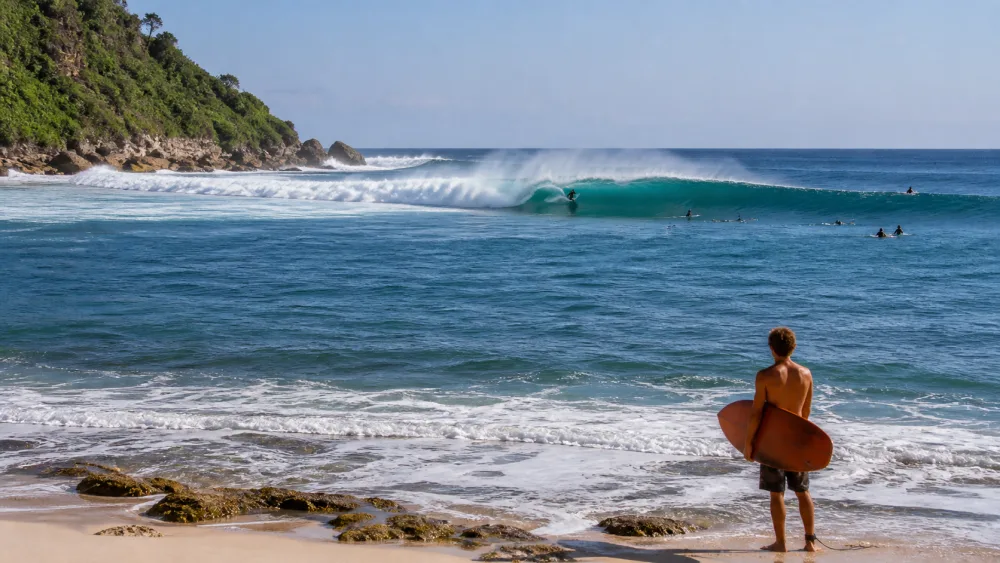
Bingin’s best window is not simply low tide or dry season. The wave needs enough south or southwest swell, offshore wind, usable water depth and a crowd level that still allows a capable surfer to apply the session objective.
Local insight from Hendra Surf School · Approximately 10 minutes
Start with the surfer and objective
A low-tide barrel may be the desired window for an advanced surfer and an irresponsible choice for a first Bingin session. Before arranging surf coaching at Bingin, define whether the goal is reef familiarisation, take-off practice, high-line speed or barrel technique.
| Dry season | More consistent south/southwest swell and common offshore trade wind. |
|---|---|
| Mid tide | Frequent balance between barrel shape and water over reef. |
| Low tide | Hollower and more dangerous; experienced surfers only. |
| High tide | Softer shape, more swell needed and potentially stronger current. |
| Crowd | Small take-off zone amplifies competition even with few surfers. |
Dry-season pattern
From roughly April through October, Indian Ocean groundswells reach the Bukit more consistently. East and southeast trade wind is commonly offshore at Bingin, grooming the left and holding the lip open.
Peak season also concentrates skilled locals and travelling surfers. Clean conditions do not automatically create a productive coached session if the take-off is too crowded to practise repeatedly.
Wet-season opportunities
Smaller or less consistent swell and less favourable west-coast wind reduce reliability during wet season. Calm mornings and short offshore windows can still occur, particularly on a suitable swell direction.
A quiet lineup on a poor wind or weak swell does not necessarily improve learning. The wave still needs enough shape to practise the intended skill without forcing a shallow or collapsing section.
How each tide changes Bingin
Rising or mid tide
This is often the most practical introduction for a confident intermediate. There is more water over the reef than at low tide while the peak can retain its fast left shape.
Dropping toward low
The barrel becomes more defined and the take-off sharper. Reef exposure and the inside end section become increasingly consequential.
High water
The wave may become fuller and need a larger swell. Current can pull surfers away from the peak, increasing paddling demand and complicating entry or exit.
Swell size, direction and period
Southwest energy commonly creates Bingin’s best-known shape. Direction affects how directly the swell hits the ledge and whether the take-off opens or closes. More period adds energy and can make a moderate forecast feel much stronger.
A head-high type range may produce the classic compact barrel, but exact face size varies by forecast method and local bathymetry. Use size descriptions as planning context, then inspect the actual sets.
Wind and time of day
Light offshore wind produces a clean face and visible entry line. Very strong offshore can make the lip harder to enter, add spray and slow a surfer at the top. Morning is often useful for lighter wind, but tide may override the clock.
Bingin faces generally northwest, so late-day light can be attractive for photos. Sunset timing should never replace a safe tide, enough visibility and a clear exit.
Crowd is part of the forecast
Bingin’s take-off is compact. A small group of skilled surfers can occupy it more completely than a larger crowd spread across an open beach. Priority knowledge and patience are essential.
- Watch who is consistently sitting deepest and catching waves.
- Do not paddle for every set while learning the lineup.
- Stay out of the rider’s left-hand path when entering.
- Choose a quieter tide window or another spot if repetition becomes impossible.
- Leave the water before fatigue reduces decision speed.
Bingin Surf FAQs
What season is best for Bingin?
Dry season commonly provides more consistent swell and offshore east/southeast wind.
What tide is best?
Mid tide often balances shape and depth, but ability and swell determine the safe window.
Is low tide good?
It can produce hollow barrels but exposes very shallow reef and belongs to experienced surfers.
Does high tide suit intermediates?
Sometimes, but the wave may need more swell and current can become stronger.
When is Bingin least crowded?
Crowd changes daily; early or non-peak tide windows may help, but a small take-off can still feel full.
How close to the session should I confirm?
Plan in advance and reconfirm after the short-range forecast and actual access conditions are clearer.
Ask Hendra Whether Bingin Fits Your Level Today
Share your experience, group size and date. Hendra will check tide, swell, wind, current, crowd and a suitable South Bali coaching location before confirming.